Meet Aengus: The Heart Behind the Heartseekers
The real myth behind Fergus Hennessey and the Heartseekers.
Last week, I shared the inspiration behind my Of Gods and Monsters series and my first book, The Dreammasters, and introduced you to the goddess Caer. Now it's time to meet the god who lost his heart to her: Aengus Og.
Aengus MacOg is the son of the Dagda, the great father god of the Tuatha Dé Danann. Like many figures in Irish mythology, his name comes down to us in several forms, including Oenghus and Aonghus. According to Morgain Daimler's book, Gods and Goddesses of Ireland, the name Aengus means "unique force" or "unequaled vigor," a fitting title for a god so closely tied to love and passion.
His mother was the goddess Boann (also spelled Bóinn), a water goddess for whom the River Boyne is named. Aengus's very conception carries a touch of myth and mischief: he was born of a tryst between the Dagda and Boann, and to hide the affair, the Dagda magically compressed the nine months of gestation into a single day. Aengus is said to have been born on Samhain, the same day he would later find his love, Caer, making Samhain an auspicious date in the lives of these two lovers.
Aengus is known as the god of youth, beauty, and love, and Irish mythology holds many stories of him helping lovers find their way to true happiness. That gift for guiding hearts didn't end with him. In the Of Gods and Monsters series, Aengus has descendants called Heartseekers, and the most notable among them is Fergus Hennessey, whom Aisling meets early in The Dreammasters.
Fergus carries his ancestor's gift forward, using the magic of love to help guide others toward their own true love. He's charming, magnetic, and able to influence love in the world around him. Like Aengus, Fergus shares a special bond with birds, who flit and twitter around him wherever he goes.
The bond between Caer and Aengus made them the natural heart of this first trilogy. Their connection to Samhain worked perfectly into the story's structure, shaping the end of its first act. And because Aisling descends from Caer while Fergus descends from Aengus, their bond became an obvious extension of that ancient connection. Fergus proves instrumental throughout the trilogy, helping Aisling as she discovers her powers and faces her enemies.
In the end, Caer and Aengus remain tied together by love and by Samhain, celebrated each year on November 1. In the Of Gods and Monsters series, that date remains a vital one, echoing the myth that started it all.
May your dreams be filled with magic,
Kelley
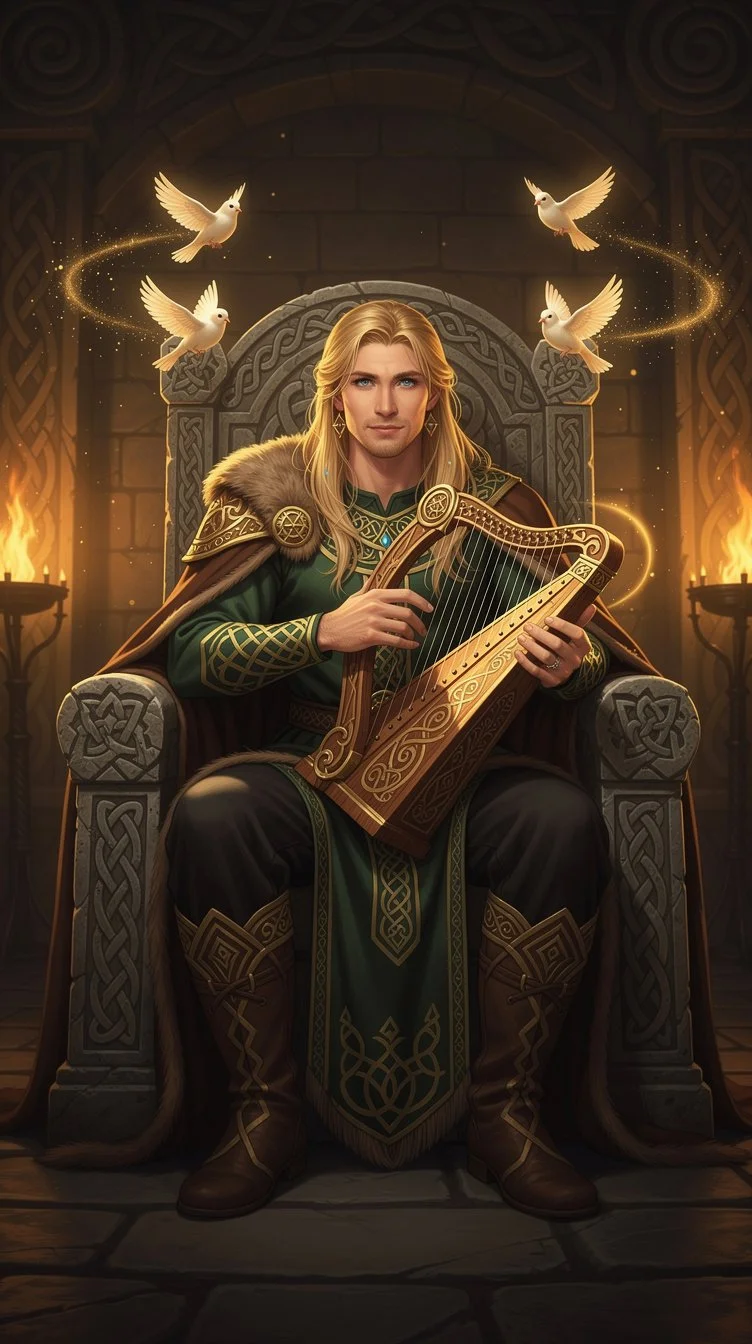
A depiction of Aengus Og
