Samhain is observed on November 1 and marks the beginning of the Celtic new year. It was one of the four seasonal festivals in the Celtic year, marking the close of one agricultural year and the start of the next. The harvest was gathered, and cattle were brought in from the fields before autumn’s darkness and winter’s cold settled over the land. The ancient celebration likely took place later in November, around November 7, and lasted three nights and three days.
Samhain begins gaimos, the dark season, a quieter, more reflective time of year. With the harvest complete and much of the outdoor work done, the rhythm of life shifted. There was less doing and more opportunity to rest, remember, and turn inward. Gaimos is often associated with the feminine and the realm of the goddess, a season of stillness and inner reflection.
This quieter half of the year stands in contrast to samos, the lighter season that follows the winter solstice. As the days gradually lengthen, the light returns, bringing the world toward spring and the resumption of agricultural work, including planting crops and raising livestock. Together, gaimos and samos reflect the cycle of harvest, rest, returning light, and renewed activity.
Samhain was also understood as a time when the usual order of things could loosen. People might dress in strange or unusual clothes, play tricks on their neighbors, and step outside their everyday roles. Fortune-telling and divination were practiced, too, as people looked for glimpses of what the coming year might bring. The season invited a little mischief and a willingness to meet the unknown.
That sense of a world turned upside down appears in stories of the Otherworld. Folklore says the veil between worlds grows thin at Samhain, allowing the fair folk or the Sídhe to cross into ours. Humans might cross over, too, but beware: time can pass differently there. You could return home to discover that hours had become years. So, perhaps don’t wander alone on Samhain night!
It’s also a time to remember and honor ancestors. In Celtic tradition, families might leave out food or drink, set a place at the table, or light a candle in the window to welcome visiting spirits.
The ancient festival of Samhain is the origin of Halloween and many of its traditions.
The season following Samhain is also associated with the Cailleach, whose name means “old woman.” This fascinating goddess, also called the Crone, is a figure of winter, age, and formidable power. She deserves a story of her own, and she’ll be the subject of an upcoming post.
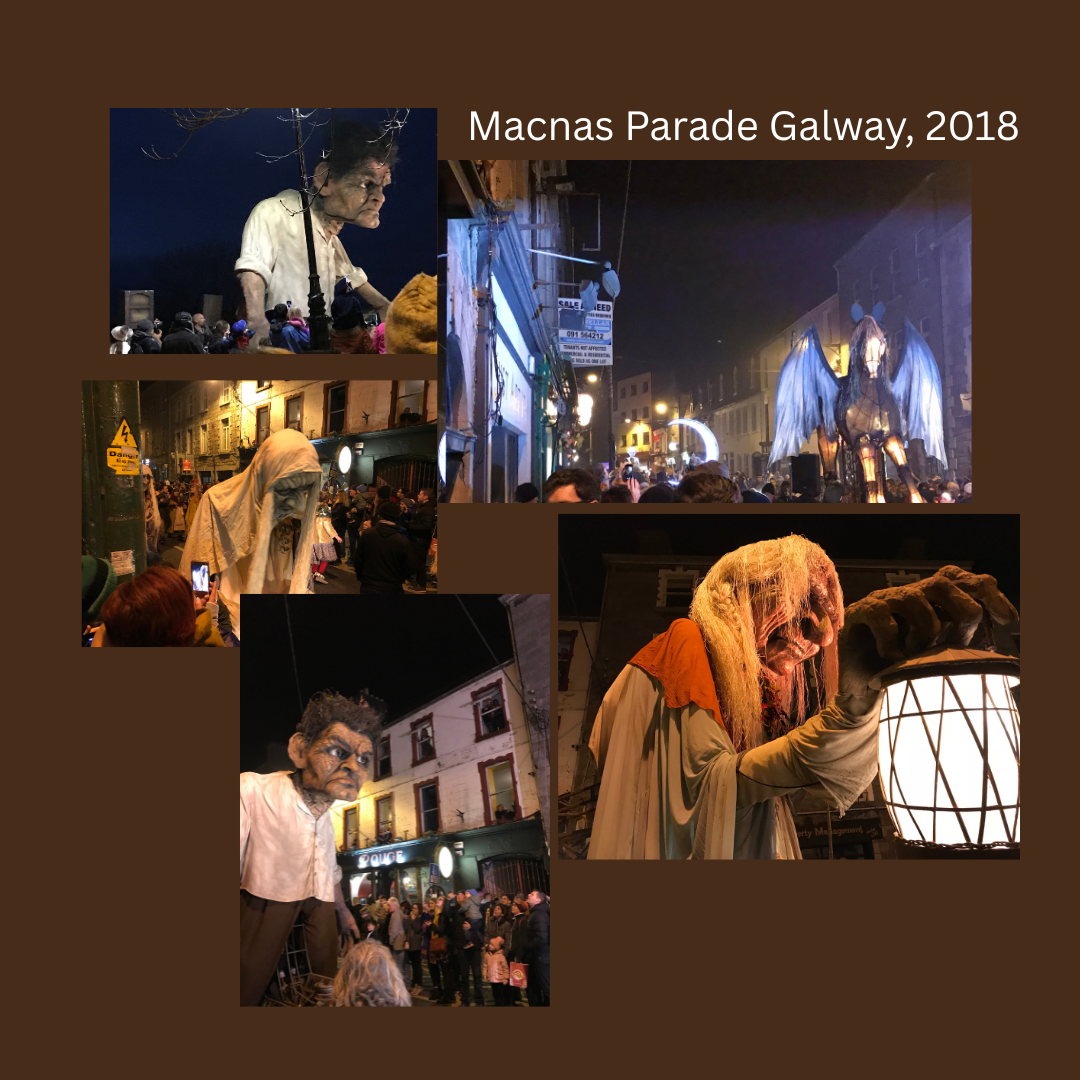
Below is a collage of photos from the Macnas Parade in 2018 in Galway, Ireland. This is a yearly Halloween parade that my husband and I got to see when we were living in Galway.
Until next time,
Kelley
